Not Being
Able to Swim
Doesn’t Rule
You Out
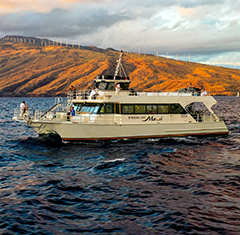
Snorkeling and swimming get lumped together, but they don’t actually require the same skill. Swimming is propelling yourself through the water. Snorkeling, on Pride of Maui at least, is floating at the surface with your face down, breathing through a tube, while gear does the work of keeping you up.
Take away the need to keep yourself afloat, and snorkeling opens up to almost anyone.
“First-time snorkeling is different from first-time swimming,” says Russell Hanson, Pride of Maui’s Video Program Director. “It happens all the time, and those guests are always thrilled.”
Yes, Non-Swimmers Snorkel at Molokini Every Day
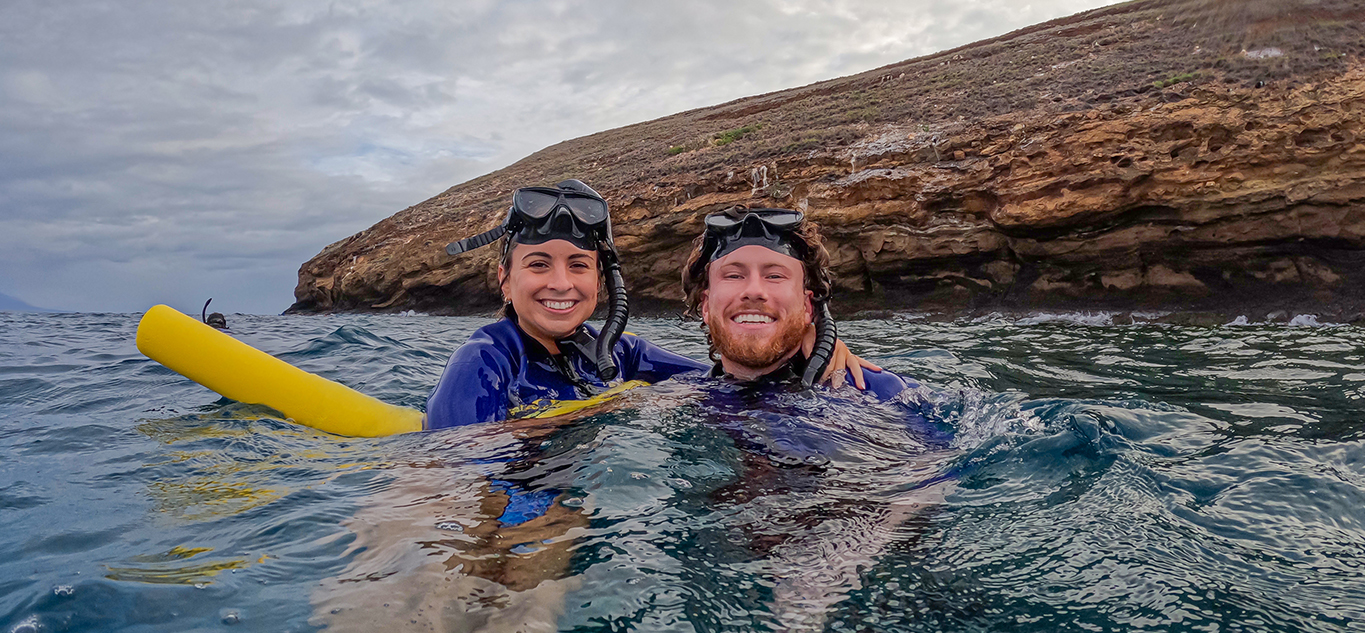
“We get non-swimmers snorkeling at Molokini every day,” Hanson says. “We put them in a life vest, a float belt, and a wetsuit, hand them two pool noodles, and they hold onto the swim line off the back of the boat and float. Those guests usually end up having the best time and the most rewarding experience out there. It’s rewarding for the crew too, being part of someone trying something they never thought they’d get to do.”
That’s the whole idea. Rather than treating swimming ability as a prerequisite, the crew builds a setup where you don’t need it. You stay secure, your crew is close, and you’re free to put your face in the water and look around without worrying about staying afloat.

How the Setup Actually Works
The specifics matter more than a general “we have flotation devices” answer, so here’s the real setup: a life vest, a float belt, and a wetsuit for warmth and extra buoyancy, plus two pool noodles for good measure. From there, you hold onto the swim line that runs along the back of the boat and float at the surface.
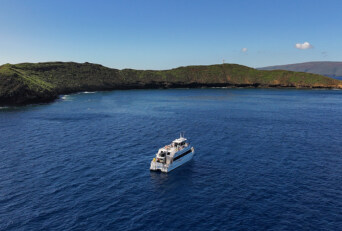
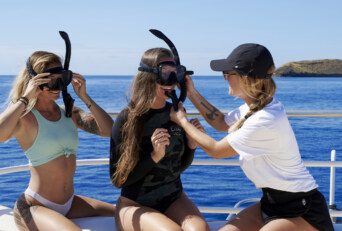
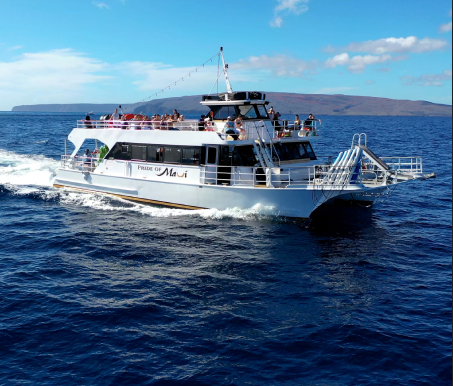
The line runs between the boat’s two hulls and connects to the swim steps, so you’re always within arm’s reach of climbing back aboard. There’s no swimming involved at any point, just floating, breathing through your snorkel, and looking down. Crew members are right there to help you get set up, answer questions, and check in once you’re in the water.
One practical note: mention it when you book, or let the crew know as soon as you’re on board. It takes a few extra minutes to get everyone properly fitted with gear, and giving the crew a heads up means they can have everything ready and get you settled in without a delay once you’re at the crater.

What Molokini Adds for a Non-Swimmer
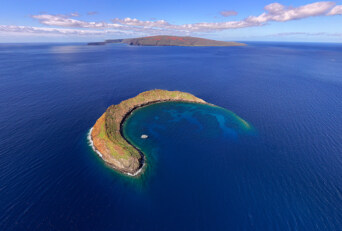
Molokini is a boat-access snorkel spot, and that’s actually an advantage if you’re not a confident swimmer. There’s no shore break to fight through and no long swim out from the sand. You go down the boat’s ladder into calm water with your gear already on and crew right there, which is a much easier entry than wading out from a beach.
The crater’s inner basin is also naturally sheltered, which is part of why it’s such a popular snorkel spot in the first place. On a day when conditions aren’t cooperating, the crew adjusts and moves to a location that’s a better fit rather than pushing through choppy water. If you’re weighing whether Molokini specifically is the right call for your comfort level, our guide on whether Molokini is good for first-time snorkelers goes deeper into how conditions shape the experience.

Will You Still See the Reef?
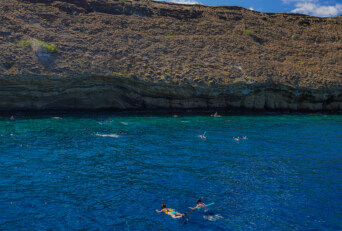
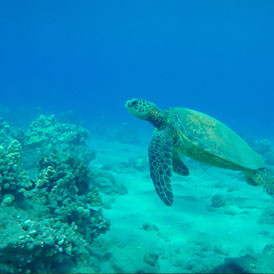
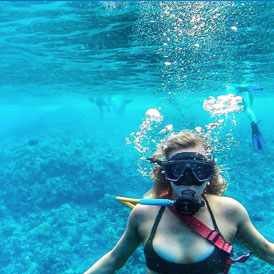
Yes. While you’re floating on the swim line, you can still see the bottom and enjoy the view, all while staying within arm’s reach of the swim platform for security and comfort.
At Molokini, the water near the boat runs a bit deeper than it does closer to shore, so the view from the swim line isn’t quite as close up as what a swimmer exploring the shallower parts of the crater gets to see. On trips that stop at Turtle Town or Coral Gardens and Olowalu, the water right at the boat tends to be shallower, so the view from the swim line there is even better.
Either way, it’s a genuinely good way to spend your time in the water: floating comfortably, breathing through your snorkel, and looking down at the reef, right at the boat the whole time.

Who Should Think Twice
One thing worth being clear about: this is not a swim lesson. Pride of Maui’s crew doesn’t provide one-on-one swim instruction, so if what you’re hoping for is to actually learn to swim on this trip, that’s not part of the experience. What the setup does provide is comfortable, supported floating, enough to get your face in the water and enjoy the reef without needing to swim at all.
This setup is also built for floating comfortably at the surface with support, not for independent exploring. If what you’re picturing is swimming freely around the crater or diving down toward the reef, that’s a different experience, and one that does call for being a comfortable swimmer. Molokini’s outer wall also drops off steeply into deep, open water, so all snorkeling, for swimmers and non-swimmers alike, sticks to the sheltered inner basin.
If you have a health condition that affects your ability to be in the water safely, talk with your doctor before booking, the same advice that applies to any ocean activity.

Ready to Book, Even If You Can’t Swim
Not being able to swim doesn’t take Molokini off the table. Between the flotation gear and a crew that’s used to setting non-swimmers up, it’s one of the more approachable ways to try Maui snorkeling for the first time. For more on how Pride of Maui handles safety and flotation across the board, see our snorkeling safety guide.
When you’re ready, browse our Molokini snorkel tours, and mention that you’re not a strong swimmer when you book so the crew can have your gear ready to go.
Frequently Asked Questions
What flotation equipment does Pride of Maui provide for non-swimmers?
Non-swimmers are set up with a life vest, a float belt, and a wetsuit, along with two pool noodles. From there, you hold onto the swim line at the back of the boat and float comfortably while you snorkel.
Is Molokini a good choice if I'm nervous about being in open water?
It can be. Molokini’s inner basin is sheltered and calm on a good morning, and boat entry means you’re eased into the water with crew right there, rather than fighting your way past shore break. If conditions aren’t cooperative, the crew adjusts the plan rather than pushing through.
Should I tell Pride of Maui in advance if I can't swim?
It helps. Mentioning it when you book gives the crew time to have your gear ready and get you set up smoothly once you’re on board.
Is snorkeling safe for someone who can't swim?
Yes, with the right setup. Between the flotation gear and staying close to the boat on the swim line, non-swimmers snorkel at Molokini regularly.
Do I need any swimming experience to book a Molokini snorkel tour?
No. Pride of Maui outfits non-swimming guests with flotation gear as a standard part of the trip, not a special accommodation you have to qualify for.