

SNUBA Is
Scuba’s Easier,
Friendlier Cousin
The whole idea behind SNUBA is to strip away the parts of scuba that intimidate first-timers (the heavy tank on your back, the certification, the deep water) while keeping the part everyone actually wants: breathing underwater, hands free, with the reef close enough to touch.
If you’re comfortable in the ocean and can breathe through a mouthpiece, you can almost certainly do SNUBA.
What Is SNUBA, and How Does It Work?
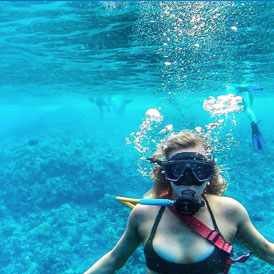
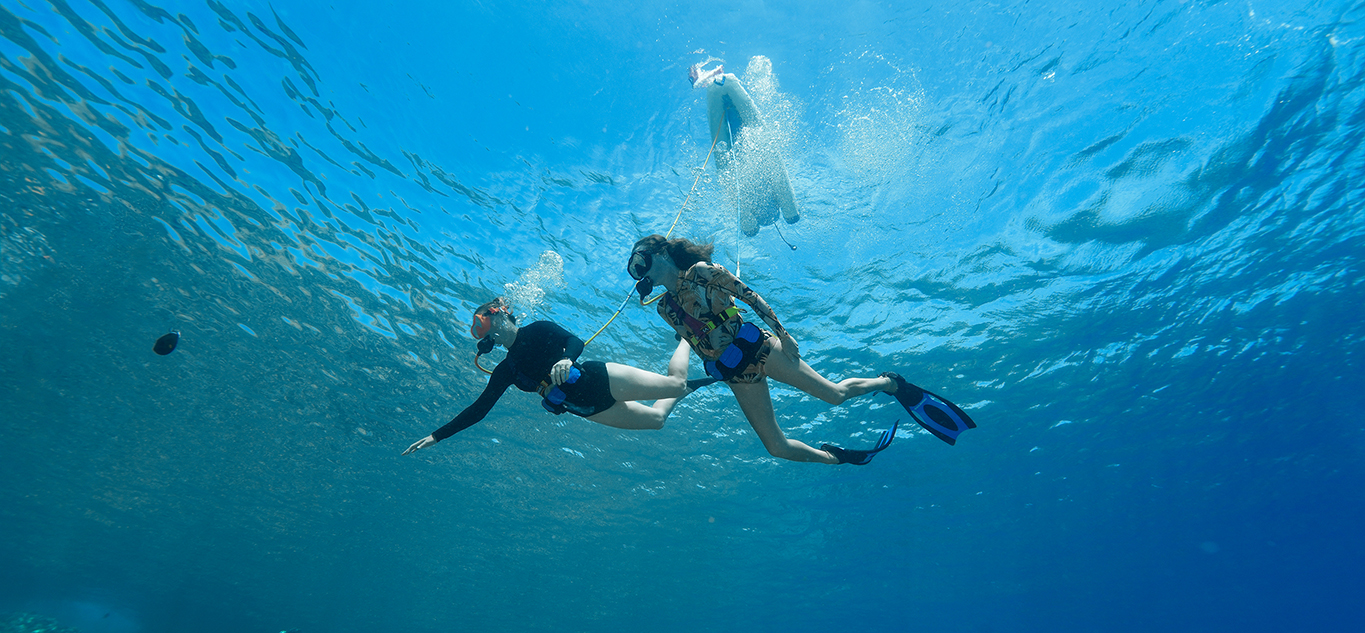
SNUBA is a guided shallow-water dive that bridges snorkeling and scuba. The name itself is a blend of snorkel and scuba. It isn’t a technical acronym, just a nod to the two activities it sits between. Instead of carrying a tank, you breathe through a regulator connected to a 20-foot air line. That line runs up to an air cylinder riding on a small raft that floats on the surface above you and follows along as you move.
Because the air supply stays on the raft, there’s nothing strapped to your back. On a Pride of Maui dive you go down to around 15 feet: deep enough to glide along the reef and feel the weightlessness that snorkeling never quite gives you, yet shallow enough to stay calm and well within reach of the surface. A dive runs about 20 to 25 minutes, with a guide in the water the whole time. No certification, no prior experience.
It’s worth knowing up front that SNUBA on the Pride of Maui is offered as an add-on to the morning Molokini snorkel tour, on a per-location basis, so it slots into a day on the water rather than being a separate trip you book on its own.

SNUBA vs. Snorkeling vs. Scuba
The quickest way to understand SNUBA is to set it next to the two activities most people already know.
Snorkeling keeps you at the surface, looking down. It’s easy and low-commitment, but you’re always floating on top of the reef rather than moving through it. Scuba diving takes you deep and gives you real range, but it requires certification, a fair amount of gear, and a comfort level that takes time to build. SNUBA lands in the middle: you drop a few feet below the surface and move freely along the reef, but with no tank to carry, no certification to earn, and a guide managing everything for you.
People often ask whether SNUBA is “better” than snorkeling or scuba. It isn’t better or worse; it’s a different doorway. It tends to suit travelers who found snorkeling a little flat and wanted to get closer, but aren’t ready to give up a day of vacation to a scuba course. For that group, it’s often the sweet spot.

Can You Do SNUBA? What You Actually Need
SNUBA is beginner-built, but it isn’t a no-swimming activity, and it’s worth being clear about that before you book. You don’t need to be a strong or experienced swimmer, but you do need basic swimming skills, comfort in the ocean, and the ability to swim a short distance on your own. The activity is open to anyone age 8 and up in average health.
There are a few health considerations too. Certain respiratory, heart, or blood-pressure conditions, along with pregnancy, call for a doctor’s clearance, and some conditions rule SNUBA out entirely for safety reasons. The full requirements and the medical questionnaire live on the full SNUBA requirements page; if you’re unsure whether SNUBA is right for you, that’s the place to check before the morning of your tour.

The First-Timer's Real Challenge Is Breathing
Almost everyone assumes the hard part of SNUBA will be the swimming, or the depth, or the gear. Usually it’s none of those. The one thing that trips up most first-timers is simply breathing, because drawing slow, steady breaths with your face underwater runs against instinct for the first minute or two.
“I’m Captain Justin with Pride of Maui. I’ve been with Pride of Maui now for 20 years this year… A majority of my career with this company, I was teaching scuba and running the SNUBA program, which I really enjoyed,” says Captain Justin Turner, Master Captain of the Pride of Maui ʻElua.
That’s exactly why the crew doesn’t rush the first few minutes in the water. You go at your own pace, and within a few minutes most first-timers have stopped thinking about the breathing altogether — usually right around the time something in the reef catches their eye instead.

What About Younger Kids?
SNUBA’s minimum age is 8, which leaves a lot of families wondering what to do with younger children. The honest answer is that snorkeling is usually the better starting point for the little ones, and there’s a natural progression to it.
“Around age 5 and up tends to be the sweet spot for snorkeling,” says Captain Justin. “That’s when kids can communicate a little better, so safety and instructions actually land, and it’s about the age snorkel gear (mask, fins) starts to fit well, which makes a huge difference in how comfortable they are. For the younger ones who aren’t quite ready, boogie boards with view ports and floaties let them see everything going on under the surface and have an amazing time, without the hurdle of learning to snorkel first.”
So a common rhythm for families is the younger kids snorkeling or riding a view-port board at the surface while the 8-and-up crowd takes a SNUBA dive, with everyone in the same water, sharing the same reef, at the level that fits them.

How to Set Yourself Up for a Great Dive
A good SNUBA dive starts the night before, and the crew will tell you the same thing. Two small bits of preparation make a bigger difference than anything else.
“Get a good night’s sleep and come well hydrated. That’s the real secret,” says Captain Justin. “Being tired or dehydrated makes you far more prone to seasickness, and the sun and the saltwater pull moisture out of you faster than people realize, so keep drinking water and electrolytes throughout the day. And if you’re someone who gets seasick, take your Dramamine, Bonine, or ginger about an hour before we leave the dock so it has time to work. Taking it once we’re already underway is usually too late.”
Timing matters too, and it’s mostly out of your hands once you’ve picked a tour, which is exactly why the SNUBA dives run in the morning. “The South and West shores and Molokini are almost always flat and calm first thing, with little to no wind and a gentle swell,” Captain Justin says. “As the morning goes on, the trades fill in and the swell builds. Earlier is simply better.” Booking the morning tour isn’t a scheduling quirk; it’s how you get the calmest water of the day.

SNUBA at Molokini and Turtle Town
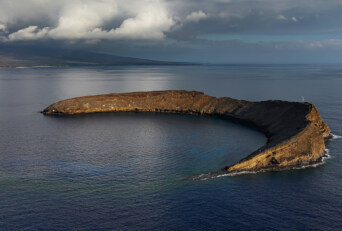
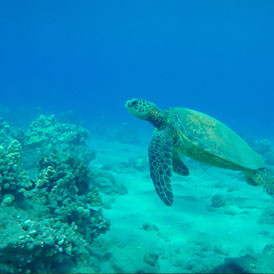
Maui is one of the best places in the world to try SNUBA for the first time, largely because of where it happens. Boats leave from Māʻalaea Harbor in central Maui and run to Molokini Crater and the reefs near Turtle Town along the South Maui coast off Wailea and Kīhei, sheltered sites where the marine life is used to visitors. Green sea turtles gliding along the reef, schools of yellow tang and parrotfish, Moorish idols, and the occasional humuhumunukunukuapuaʻa (Hawaii’s state fish) are all part of an ordinary dive down there. In winter, you can even hear humpback whales singing through the water.
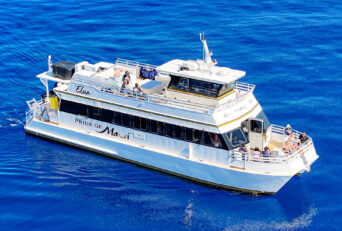
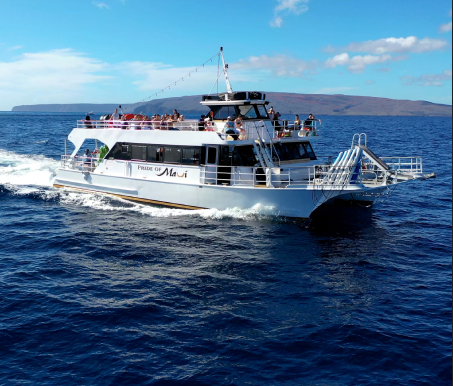
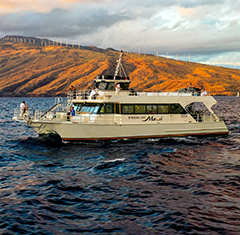
It helps to do it with a crew that has done it a lot. Pride of Maui has run its SNUBA program for more than 20 years and was named SNUBA International’s Operator of the Year, introducing more first-time divers to it than any other vessel in Hawaii, which is a big part of why even the most nervous guests tend to settle quickly.
What guests remember afterward usually isn’t a checklist of fish, though. It’s the weightlessness, the quiet, and the moment a turtle drifts close enough to make eye contact. For a lot of first-timers who were unsure about the whole thing at the dock, the SNUBA dive ends up being the part of the trip they talk about most.

Is SNUBA Right for Your Trip?
So is SNUBA worth it? For the right traveler, almost always. For visitors who want to do more than float on the surface but aren’t ready to commit to scuba, it’s often the easiest, lowest-pressure way to actually get under the water in Maui: beginner-built, family-friendly for ages 8 and up, and guided from the first breath. The guests who showed up most unsure at the dock are usually the ones who surface wanting to go straight back down.
If you’re weighing whether it fits your group, our reservations team is happy to talk through what works best for first-timers and families. You can also see how the dive fits into a day on the water in what to expect on a Maui snorkel boat tour, or read more about whether Molokini is right for first-time snorkelers.
Reviewed by Captain Justin Turner, Master Captain and SNUBA Program Coordinator, Pride of Maui.
Questions About SNUBA
Is SNUBA hard for first-time divers?
No. SNUBA is designed for beginners, with no certification or experience required, and a guide stays with you the entire dive. The one adjustment most first-timers make is learning to breathe slowly through the regulator with their face underwater, which runs against instinct at first but usually settles within the first couple of minutes once you relax.
What is the difference between SNUBA and scuba diving?
With scuba you carry a tank on your back, earn a certification, and can descend to greater depths. With SNUBA the tank stays on a floating raft at the surface and connects to you by a 20-foot air line, so there’s nothing to carry, no certification needed, and the depth stays shallow, around 15 feet on the Pride of Maui. SNUBA is built for beginners; scuba is a trained activity with far more range.
How should I prepare for a SNUBA dive in Maui?
Get a good night’s sleep and arrive well hydrated, since being tired or dehydrated makes seasickness more likely, and keep drinking water and electrolytes through the day. If you’re prone to motion sickness, take your preventative about an hour before departure so it has time to take effect. Booking a morning tour also gives you the calmest water, as the wind and swell tend to build later in the day.
What is the minimum age for SNUBA, and what about younger kids?
SNUBA is open to ages 8 and up. Younger children are usually better suited to snorkeling, which tends to work well from around age 5, when kids can follow safety instructions and snorkel gear starts to fit properly. For the littlest ones, boogie boards with view ports let them see the reef from the surface without having to learn to snorkel first.
Should a beginner choose SNUBA or snorkeling?
Both are beginner-friendly. Snorkeling keeps you at the surface looking down and requires the least adjustment, while SNUBA lets you descend along the reef and breathe underwater for a more immersive feel. Many families do both on the same trip: snorkeling for everyone, with a SNUBA dive added for those 8 and older who want to get closer to the reef.