

A First Snorkel Feels
Bigger in Your Head
Than It Is in Reality
Most people who’ve never snorkeled before don’t actually think of themselves as scared. It’s more that a handful of specific things are unclear: how you’re supposed to breathe with your face in the water, how deep it’ll actually feel once you’re out there, whether your body is even going to cooperate once you’re floating instead of standing. Those questions come up on nearly every Maui snorkeling tour, especially for guests visiting Molokini Crater for the first time. Crews who do this every day have heard each one enough times to know exactly where to start.
“What If I Can’t Breathe Through the Snorkel?”
Breathing through a snorkel trips up more first-timers than anything else, mostly because it means giving up your nose and trusting a tube instead. It’s a strange half-second the first time you try it.
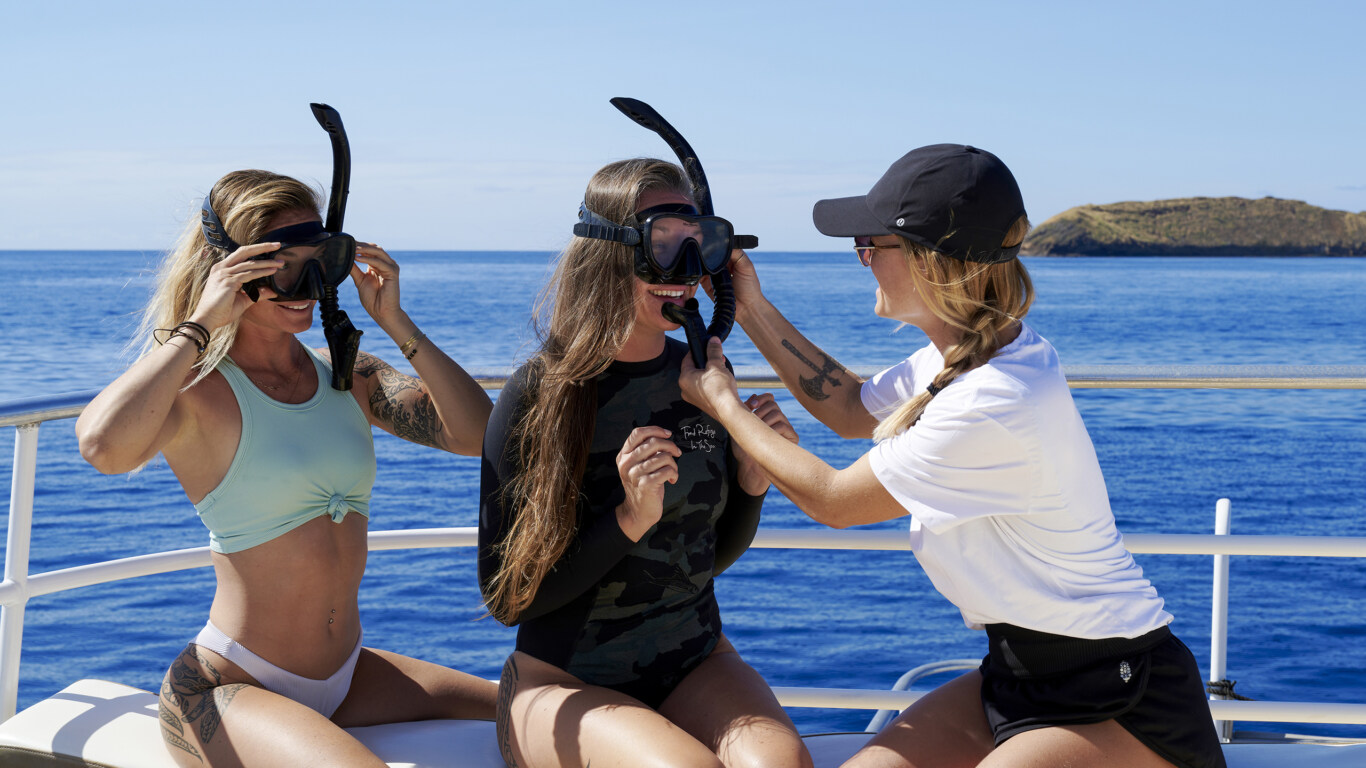
Crews walk you through it before you’re anywhere near the water: how the snorkel clears, how to breathe slow instead of fast, sometimes just practicing right there on deck with the mask on and nothing else to worry about yet.
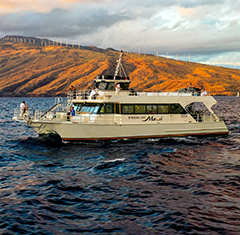
“Sometimes we start off just getting comfortable wearing that mask on your face and then take the next step to breathing through that snorkel,” says Captain Justin Turner, Master Captain of Pride of Maui’s ʻElua. “Once you’re comfortable breathing, once your mind tells you, okay, you’re safe, you can breathe, then you’re like, oh, that’s a pretty fish. And it clicks for you.”
For most guests, that’s the whole hurdle. Once it clicks, nobody’s thinking about the snorkel anymore.

“What If the Water Feels Too Deep?”
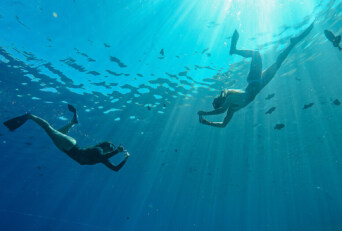
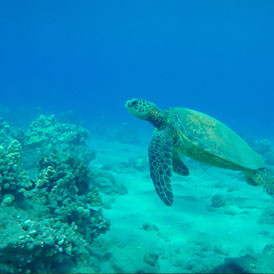
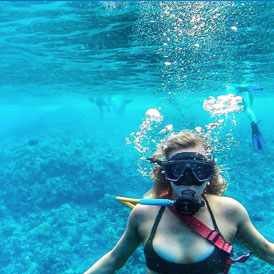
Open water looks a lot more intimidating from the boat rail than it actually feels once you’re in it. Part of that comes down to visibility. At a spot like Molokini Crater, the water is often clear enough to see the reef in real detail even when it’s well below you, so “deep” doesn’t translate to “dark” the way people expect.
“Molokini, world famous for visibility,” Turner says. “Even when the shoreline is poor visibility, we have one of the top sites in the whole wide world famous for visibility to go to.”
You’re also not expected to tread water or dive down to get a good look. A flotation belt or vest keeps you comfortably at the surface the entire time, well within reach of the boat. Once you’re floating instead of bracing, the depth underneath you tends to stop being the thing you’re thinking about.

“I’m Not a Strong Swimmer”
Snorkeling doesn’t ask much of you as a swimmer, even though it’s easy to assume otherwise. You’re floating and looking down, not covering distance or fighting a current.
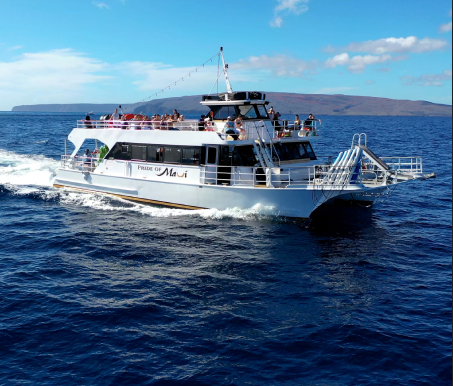
“We have people that don’t know how to swim at all almost every single day. That’s not a deal breaker at all,” says Turner. On the Pride of Maui Molokini Snorkeling Tour, crew get you fitted with flotation gear suited to your comfort level, walk you through entry at your own pace, and stay close, on the deck and in the water, the whole time.
Most people start by just floating near the boat and getting used to breathing before they go anywhere. Nobody’s timing you or expecting you to swim laps. The point is to look at the reef, not to prove anything.

“What If I Panic?”
Panic, when it happens, is almost never about anything actually going wrong. It’s uncertainty catching up a few seconds too fast.
Crews are watching for the small signs before it gets that far: breathing that speeds up, a mask getting adjusted over and over, a head lifting more than it needs to. That’s when crew step in, not after.
“We don’t pressure anybody. You’re not going to be hurried at all,” Turner says. “I always encourage people to just start wherever they’re comfortable, because if you’re comfortable, you can have fun, and when you have fun, you get more comfortable, and it starts feeding into itself. You take it, start wherever you’re comfortable at, and you just keep taking little baby steps, one step at a time, and you’ll have an incredible day.”
Most guests never actually need to head back. Just knowing that choice is always there tends to be enough.

“What If I Look Silly?”
Masks fog up. Fins make you walk like you’ve never used your feet before. Almost everyone fumbles with the gear a little in the first few minutes on deck, and none of it lasts.
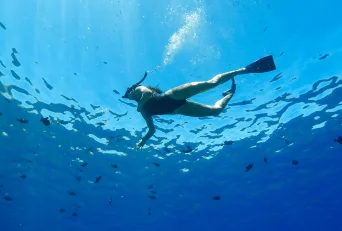
Once your face is in the water and there’s an actual reef to look at, the self-consciousness about how you look mostly just stops mattering. You’re watching fish move around a coral head, not thinking about your fins.
Most guests forget they were ever worried about looking silly within the first few minutes in the water.
What Changes Once You’re In The Water
Feeling nervous before your first snorkel doesn’t mean you’re not ready for it. It usually just means you’re about to try something you’ve never done before, which is a different thing entirely.
With clear instruction, the right flotation, and crew who are watching for exactly this, most of these worries fade within the first few minutes in the water. What’s left afterward isn’t just relief that it’s over. It’s the sense that you know what you’re doing now, which is what makes people want to do it again.
Reviewed by Captain Justin Turner, Master Captain and SNUBA Program Coordinator, Pride of Maui.