Maui snorkeling
photography tips
Whether you’re joining a Maui snorkeling tour with a phone, a GoPro, or a small camera, these simple techniques will help you capture clearer underwater photos, vibrant reef scenes, and memorable moments on the water.
Quick wins before you board
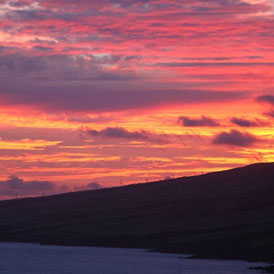
Morning light in Maui is soft and golden. It flatters skin tones and makes the water glow. A little prep goes a long way.
- Charge all batteries. Pack a dry bag, microfiber cloth, and an extra SD card.
- Turn on airplane mode to save battery.
- Apply reef-safe sunscreen early so lenses stay clear. Make sure your hands are clean and dry before you touch your gear.
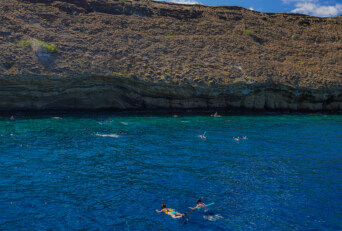
I shoot most mornings on our Molokini snorkel tour because the light shortly after sunrise is special, and the ocean is often calm.
Why Maui mornings work: Trade winds are usually lighter early, the surface is calmer, and visibility is often better. Midday sun is overhead and gives brighter color. Late afternoon can bring more texture on the water. At Molokini Crater, the protected shape often means clear, blue water that helps reduce backscatter (floating particles that show as white dots). If the surface is choppy, shoot slightly down-sun and get close to your subject to keep detail and contrast.
Gear that makes it easy
- Phone: In a good dive housing it’s sharp and simple.
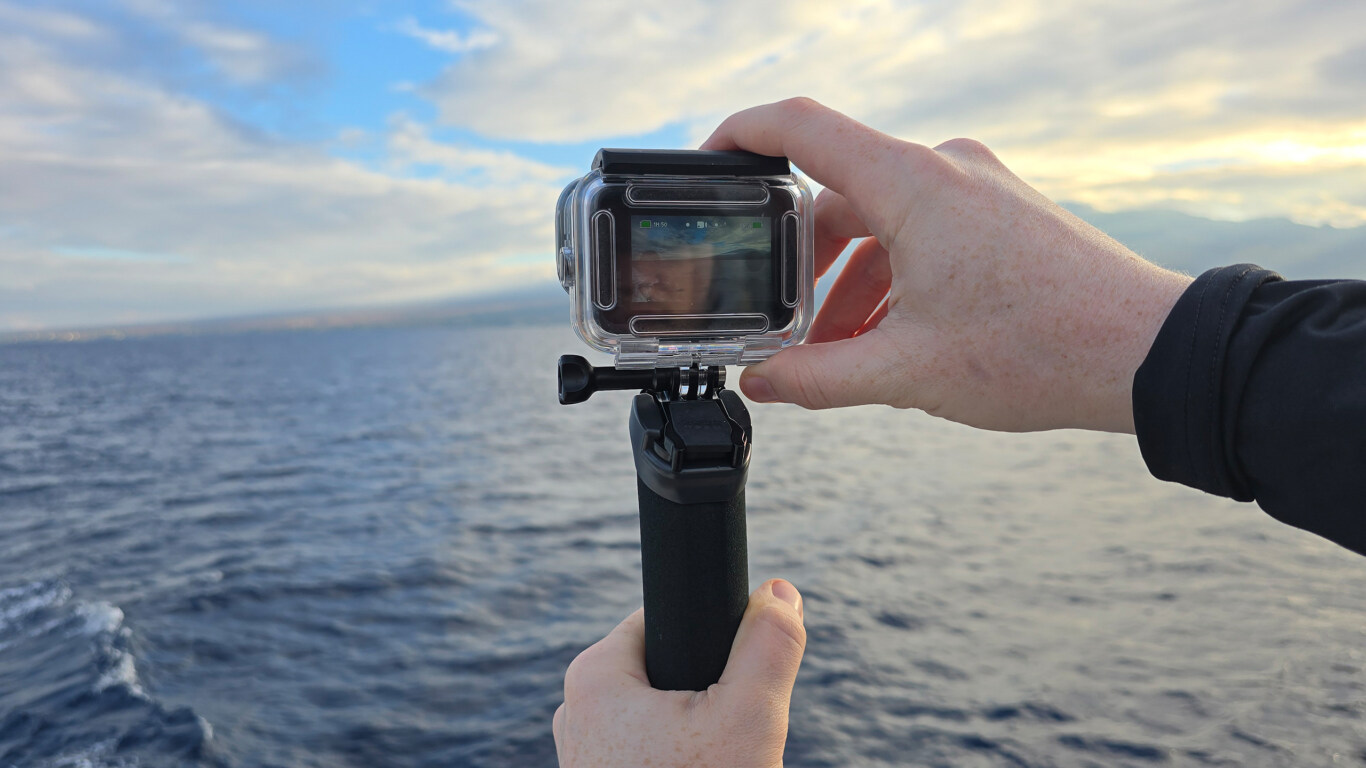
- GoPro: Small, tough, and great for photos and video.
- Small mirrorless: More control without hauling a big rig.
Simple camera settings that just work
- Phone: HDR on. Tap and hold to lock focus, then lower exposure a touch.
- GoPro: 4K at 60 fps. Wide or Linear. HyperSmooth on.
- Mirrorless: Aperture Priority around f/5.6. Burst on. Auto ISO with a sensible max.
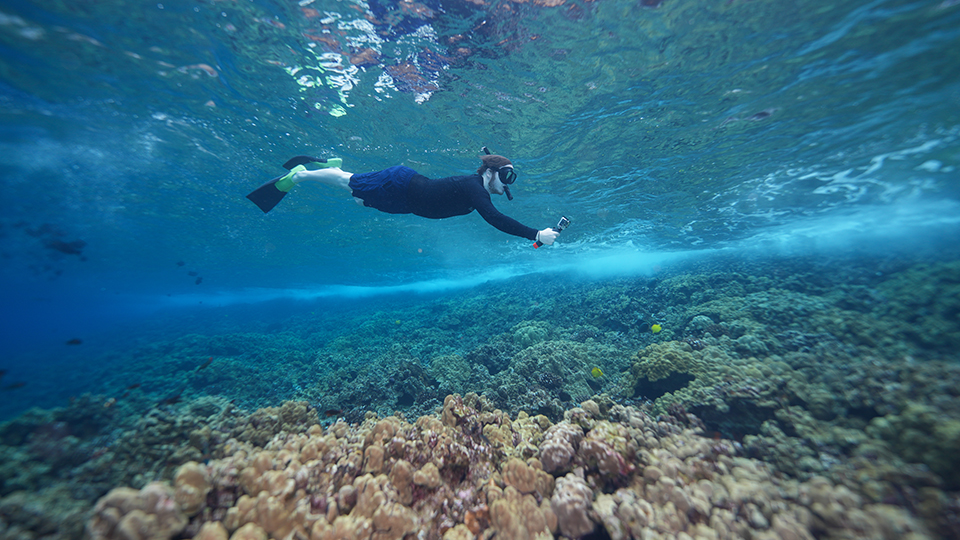
Composition in the water
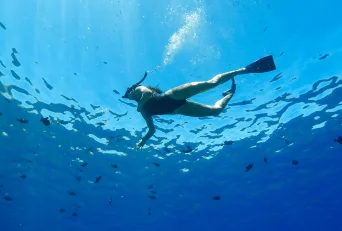
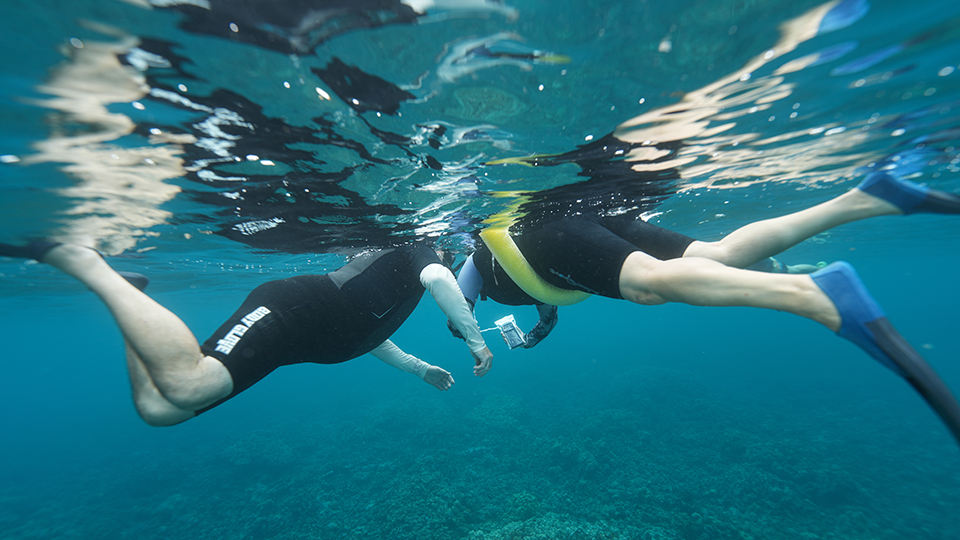
- Get low and angle slightly upward to place swimmers against the bright surface.
- Keep the sun behind you for bright color. Shoot toward the sun for rays and silhouettes.
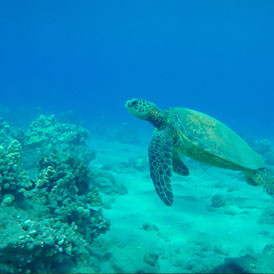
- Fill the frame with one subject. Wait for eye contact or a clean side profile.
- Shoot short bursts, then select the cleanest frame.
- Give wildlife space. Never touch turtles or coral. Follow crew instructions.
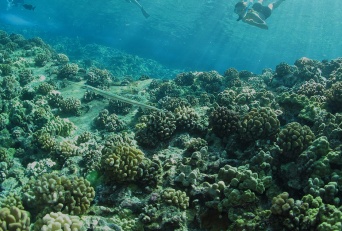
At places like Molokini Crater, clear water and reef structure can make composition much easier. The crescent-shaped crater often creates calmer conditions, and that visibility helps photos feel cleaner and more detailed. Look for natural layers like coral in the foreground, fish moving across the middle of the frame, and blue water fading behind them.
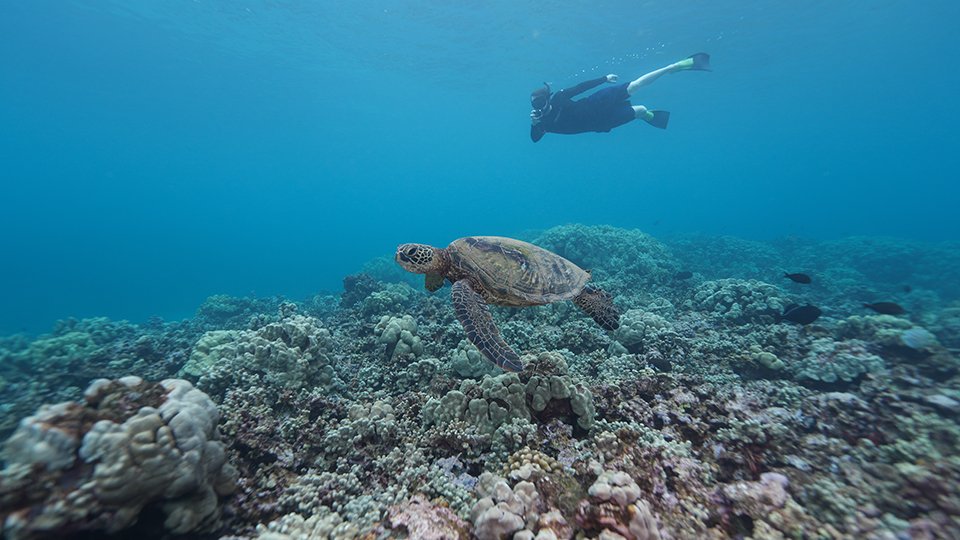
Respect wildlife and the reef
Think of it as visiting someone’s home. Look, don’t touch or chase. Keep your fins up around coral. Give turtles room. Listen to the crew. If you want a refresher, read our snorkeling safety tips or join the onboard briefing before you hop in.

Don’t miss the boat moments
- Tell the whole story of your day.
- The ride out with your crew sharing a shaka
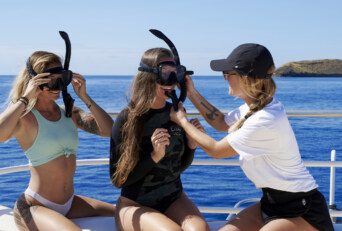
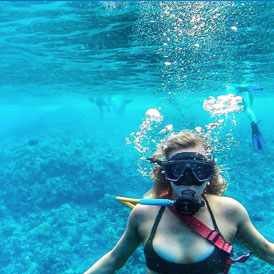
- Mask-on portraits with wind in your hair
- Splash sequences from the waterslide
- The grill, lunch plates, and happy faces
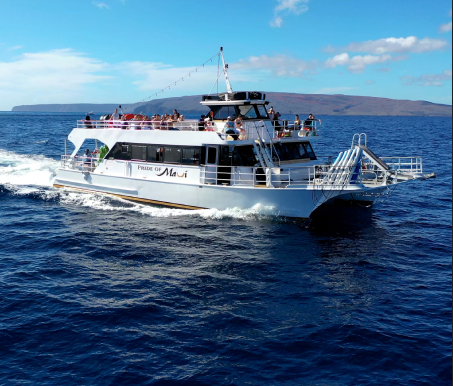
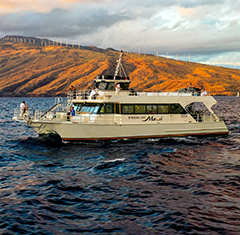
- A wide shot of the catamaran with the Maui coastline in back
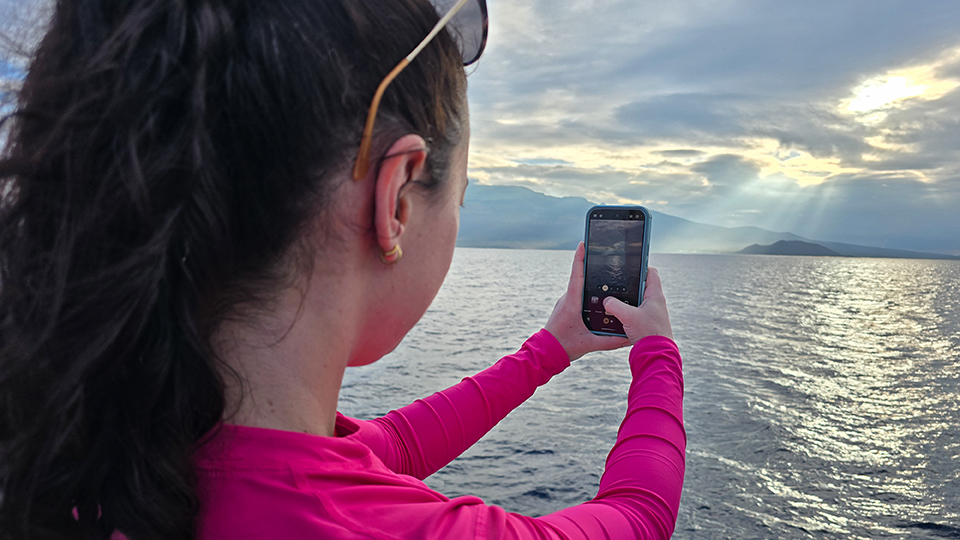
Super-quick edit workflow
Cull first, then tweak.
- Brighten slightly. Add contrast. Deepen shadows. Straighten horizons. Remove haze.
- Light bump to vibrance or use a gentle preset if that’s your style.
- Apps that work: the built-in Photos app for quick fixes, Lightroom Mobile for finer control, and the GoPro app if you shot action clips.
- Export a full-resolution set for printing and a smaller set for sharing.
What I pack in my day kit
- Camera
- Waterproof housing or case
- Anti-fog inserts (or a tiny piece of paper towel)
- Spare batteries and SD cards
- Microfiber cloth or lens wipes
- Dry bag or small backpack
- A few mounts, a floating handle, and a wrist lanyard
from calm conditions,
not perfect gear
You don’t need a professional camera to capture great snorkeling photos in Maui.
Most of the time, the difference comes down to light, positioning, and how comfortable you feel in the water.
When those pieces come together, even simple setups can produce photos that feel sharp, colorful, and true to the moment.
If you’re planning to snorkel at places like Molokini Crater, paying attention to conditions, not just equipment, will make the biggest impact on what you bring home.
FAQ
What’s the best time to shoot underwater in Maui?
Morning for calmer seas and even light. Midday for the brightest color.
Do I need a big camera?
No. A phone in a dive housing with anti-fog inserts or a GoPro is enough with good technique.
Should I use filters?
Yes, at depth it helps to set white balance or use a red filter to restore natural color.