






Whale Activity
Isn’t Always
Loud or Dramatic
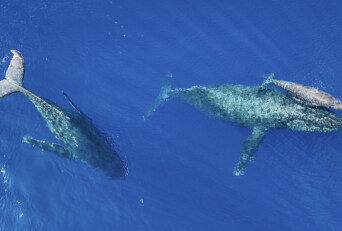
Whale activity is best understood as a pattern, not a moment. Whales are constantly moving, resting, communicating, and interacting with their environment.
Some of the most active days don’t come with big splashes at all, they come with subtle surface signs, consistent movement, and behaviors that unfold over time.
Traveling Whales Can Signal Sustained Activity
Not all whales linger in one place. Traveling whales may surface briefly, dive for extended periods, then reappear farther along a consistent path.
This steady movement often indicates purposeful behavior such as migration progress, escorting, or energy conservation. While less dramatic than breaching, traveling patterns can reflect strong whale presence across a wide area.
On board, crews track these movements to anticipate where whales may surface next rather than waiting for a single spectacle moment.

Resting Whales Are Still Actively Using the Area
Resting behavior is often misunderstood. Whales may appear still, floating quietly or surfacing slowly, but this does not mean inactivity.
Humpbacks rest in short intervals, often in protected waters. During these periods, they remain alert, aware of nearby whales, vessels, and environmental conditions. Resting areas frequently overlap with nurseries, social zones, or migratory pathways.
These calm moments are often when guests witness close passes, tail lifts, or prolonged surface time.

Much of Whale Communication Happens Below the Surface
Some of the most significant whale activity is entirely invisible.
Humpback whales communicate through low-frequency vocalizations that travel great distances underwater. Males produce complex songs during breeding season, while other vocalizations support social coordination and navigation.

Calmer Days Often Reveal More Natural Behavior
On quieter days, whale behavior is often more relaxed and less reactive. Without frequent surface displays, guests may notice subtle movements, synchronized surfacing, or longer viewing windows as whales move naturally through the area.
These conditions allow for deeper observation of how whales travel, rest, and interact without expending extra energy.

Understanding Activity Enhances the Whale Watching Experience
When activity is viewed through behavior rather than spectacle, whale watching becomes less about waiting for a breach and more about observing patterns, presence, and interaction.
This perspective helps set realistic expectations and deepens appreciation for what’s happening beneath the surface. Whether whales breach or remain quiet, an active day is one where whales are present, engaged, and using the waters around Maui.
Guests who want to explore whale behavior in more depth can also visit our educational site, mauiwhalewatching.com, which focuses on seasonal patterns and whale behavior around Maui.

Quiet activity
can be just
as powerful
Whale watching in Maui isn’t about chasing spectacle. It’s about noticing patterns, reading the ocean, and letting moments unfold naturally. Whether activity is bold or barely visible, the experience is shaped by patience, respect, and time on the water.
Mahalo for taking the time to understand how whale activity really works in Maui waters.