
A First Snorkel Feels
Bigger in Your Head
Than It Is in Reality
Most first-time snorkelers don’t describe themselves as afraid. They describe themselves as unsure.
Unsure about breathing.
Unsure about depth.
Unsure how their body will react once they’re in the water.
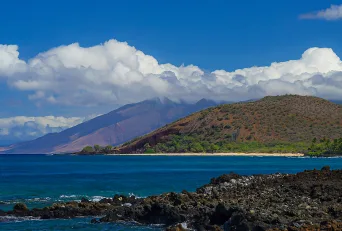
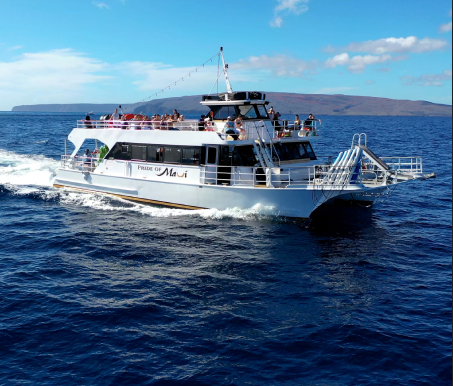
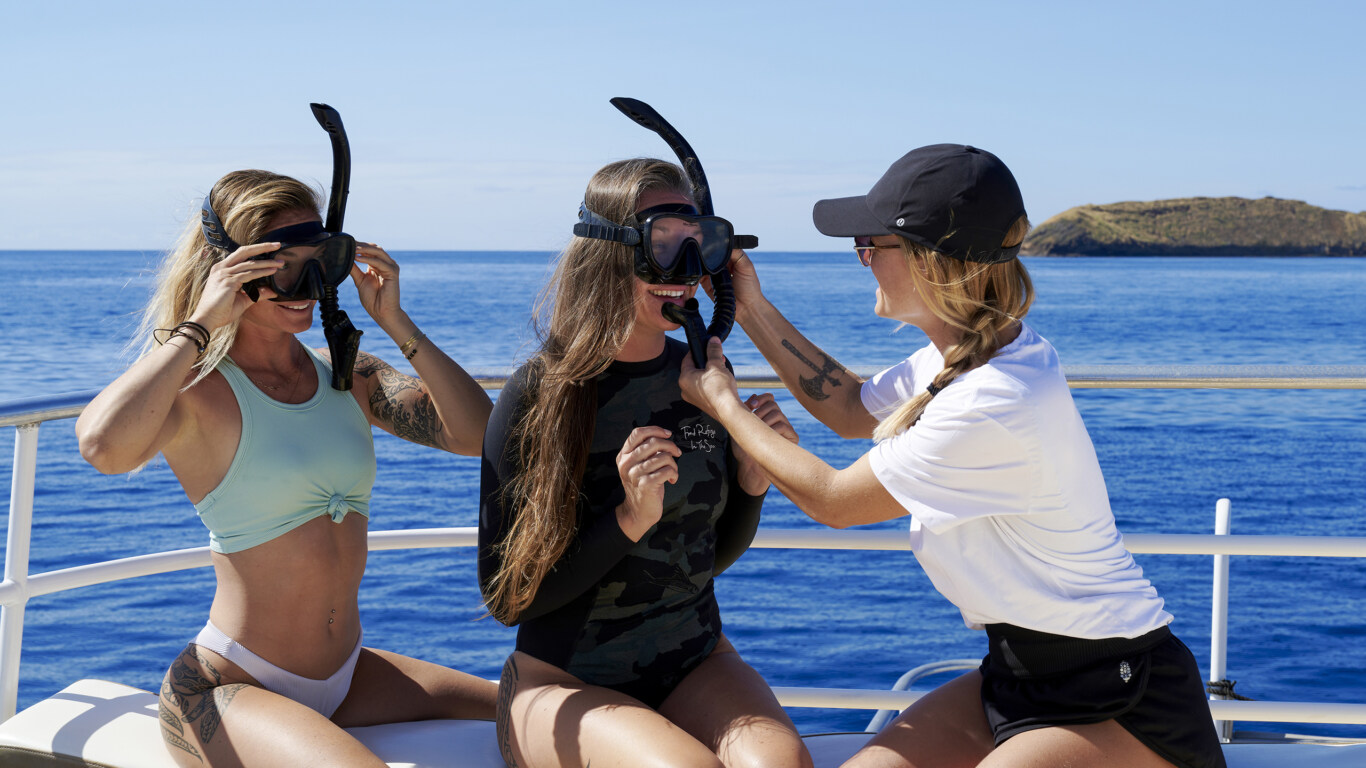
Those concerns are common on Maui snorkeling tours, especially for guests visiting Molokini Crater for the first time. Professional crews anticipate these questions before anyone steps off the boat.
Structure, not bravery, is what changes the experience.
“What If I Can’t Breathe Through the Snorkel?”
Breathing through a snorkel feels unfamiliar because it removes your usual ability to breathe through your nose. The adjustment is mostly mental.

“What If the Water Feels Too Deep?”
Open water can look intimidating from above. In reality, depth often brings clarity.
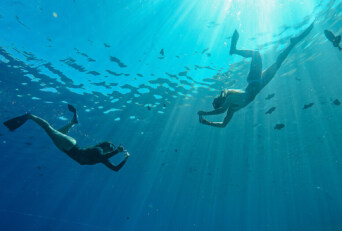
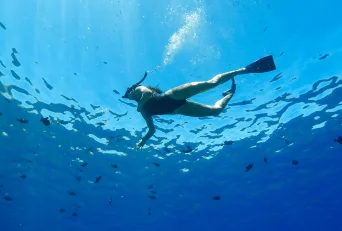
At offshore locations like Molokini Crater, visibility can extend dozens of feet. You can see the reef below you clearly, even when it’s far beneath the surface.

“I’m Not a Strong Swimmer”
Snorkeling is not endurance swimming. You are floating, moving gradually, and staying within visible boundaries.

“What If I Panic?”
Panic usually builds from uncertainty, not danger.
Experienced snorkeling crews watch body language carefully. Quick breathing, frequent mask adjustments, or repeated head lifting are gentle signals that someone may need guidance.

“What If I Look Silly?”
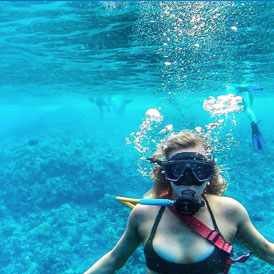
Masks fog. Fins feel awkward. Everyone makes small adjustments in the first few minutes.
But once attention shifts downward toward the reef, self-consciousness fades. Fish move in small groups. Light filters through the water. The environment becomes the focus.
Most guests forget their initial hesitation within minutes.
Confidence
Comes From Structure,
Not Courage
First-time snorkeling nerves are not a signal that you shouldn’t try it.
They are a sign that you are about to do something new.
With clear instruction, proper flotation, and attentive crew support, most concerns resolve within the first few minutes in the water. What remains afterward is not relief. It is familiarity.